
Substrate assessment and preparation
Checking the floor and wall substrate, removing contaminants, and making sure the surface is sound, clean and ready to accept a membrane.
Bathroom Waterproofing
Wet area membranes for new bathrooms, renovations, shower recesses and leak repairs.
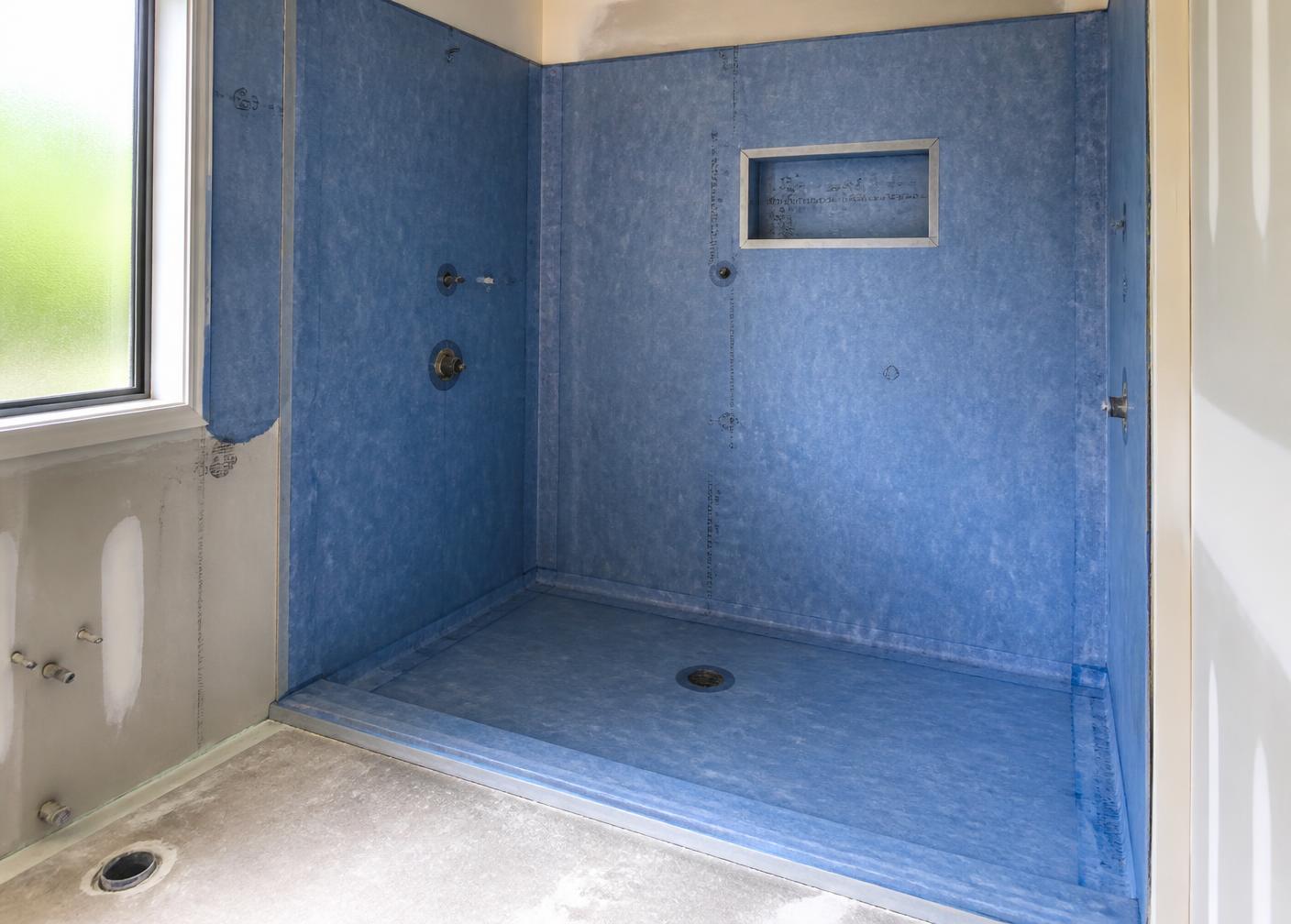
The bathroom is the most water-loaded room in a home, and the shower is the most heavily loaded part of that room. Diamond Seal Waterproofing applies bathroom waterproofing membranes to floors, walls, hobs, shower recesses and penetrations so that water stays in the areas designed to handle it, rather than migrating into wall cavities, floor structures and adjoining rooms.
Bathroom waterproofing is completely concealed once tiling starts, which makes it very easy to under-do and very expensive to correct. Rectifying failed bathroom waterproofing usually means removing tiles, screed and sometimes wall sheeting. Getting the membrane right the first time is far cheaper than getting it right the second time.
Most bathroom leaks are not plumbing failures. They are waterproofing failures — water passing through grout and tile, reaching a membrane that is missing, thin, poorly detailed or damaged, then finding its way out somewhere else.
Typical symptoms include a damp patch on the wall outside the bathroom, a stain on the ceiling below, skirting boards that swell and peel, mould that keeps returning at the base of walls, or timber flooring lifting near the bathroom door. If the moisture appears without the tap running upstairs, waterproofing is the first place to look.
Checking the floor and wall substrate, removing contaminants, and making sure the surface is sound, clean and ready to accept a membrane.
Applying the correct primer for the substrate so the membrane bonds properly rather than sitting on dust or a sealed surface.
Bond breakers and reinforcing at floor-to-wall junctions, internal corners, hobs, and around waste outlets, tap penetrations and shower niches.
Applying the waterproofing membrane in coats to the required coverage across floors, shower walls and any other areas specified for the bathroom.
Confirming the floor drains toward the waste so water is not left ponding on top of the membrane.
Allowing the membrane to cure and protecting it from damage by following trades before tiling begins.
Keeps water out of wall frames, floor sheeting, slabs and the rooms next door and below.
Persistent mould and musty smells are often the visible result of moisture sitting where it should never reach.
Waterproofing scheduled to fit between screeding and tiling so the renovation keeps moving.
Corners, hobs, niches and penetrations receive specific attention because that is where bathrooms leak.
If any of these sound familiar, it is worth having the area assessed before the damage spreads further.
Have a question that isn't covered here? Call 0452 528 532 and we'll talk it through.
Talk to Diamond Seal Waterproofing about your residential, commercial or construction waterproofing requirements.