
Inspection of existing joints
Assessing sealant condition, joint dimensions and any signs that water is already entering.
Balcony & External Caulking
External joint sealing for balconies, thresholds, window frames and facades exposed to Sydney weather.
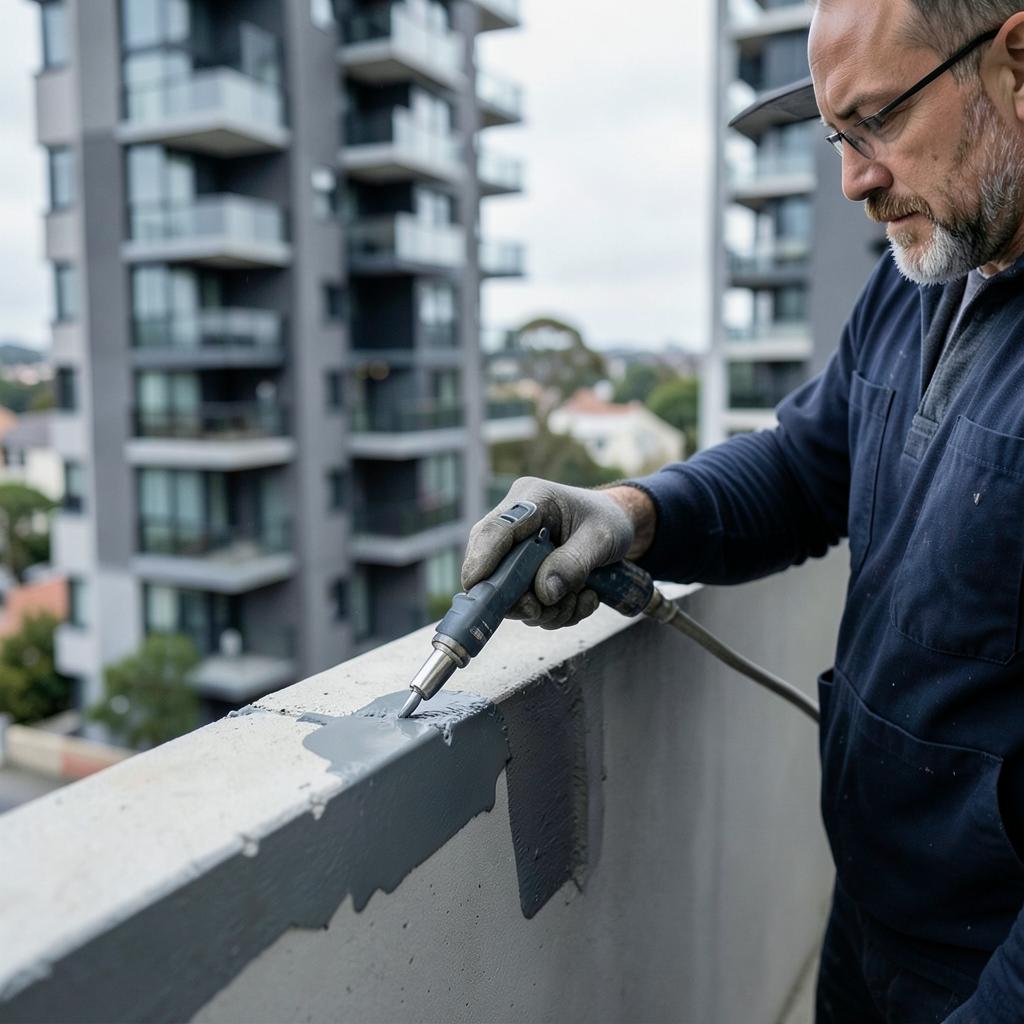
External caulking works harder than any other sealant on a building. It sits in full sun, cops wind-driven rain, and moves every day as materials expand and contract with temperature. Diamond Seal Waterproofing provides balcony and external caulking across Sydney — sealing the joints that keep weather out of the building envelope.
On a balcony, sealant and waterproofing are two halves of the same system. The membrane protects the slab; the caulking protects everything the membrane cannot reach — door thresholds, balustrade post junctions, wall interfaces, drainage surrounds and control joints. When that sealant fails, water has a direct path past otherwise sound waterproofing.
UV radiation breaks sealant down from the surface, thermal movement fatigues it at the bond line, and joints that were too shallow, too wide or poorly prepared simply let go. On coastal and elevated sites the exposure is even more demanding.
The warning signs are easy to spot once you look: sealant that has cracked across the joint, pulled cleanly away from one side, shrunk below the surface of the joint, or gone chalky and brittle. Each of those is an open invitation for water — and on a balcony, that water ends up in the structure or the room below.
Assessing sealant condition, joint dimensions and any signs that water is already entering.
Cutting out cracked, lifted or degraded sealant back to a clean, sound joint.
Cleaning substrates, and installing backing rod where needed so the sealant has the correct depth and shape.
Applying an exterior-grade sealant suited to the substrates and expected joint movement.
Tooling joints to a neat, weathering profile with full contact on both sides of the joint.
Where membrane work is also required, detailing the caulking as part of the overall waterproofing system.
Properly sealed joints close the pathways that storm rain uses to enter the building envelope.
Sound sealant at thresholds and penetrations stops water bypassing an otherwise intact membrane.
Sealants and joint geometry selected so the joint can move without tearing or debonding.
UV-stable, weather-resistant sealants chosen for external exposure rather than interior silicone.
If any of these sound familiar, it is worth having the area assessed before the damage spreads further.
Have a question that isn't covered here? Call 0452 528 532 and we'll talk it through.
Talk to Diamond Seal Waterproofing about your residential, commercial or construction waterproofing requirements.