
Assessment of water behaviour
Establishing where water is entering, how it varies with rainfall, and whether external drainage is contributing.
Basement Waterproofing
Below-ground waterproofing, tanking and remedial works for basements and sub-floor areas.
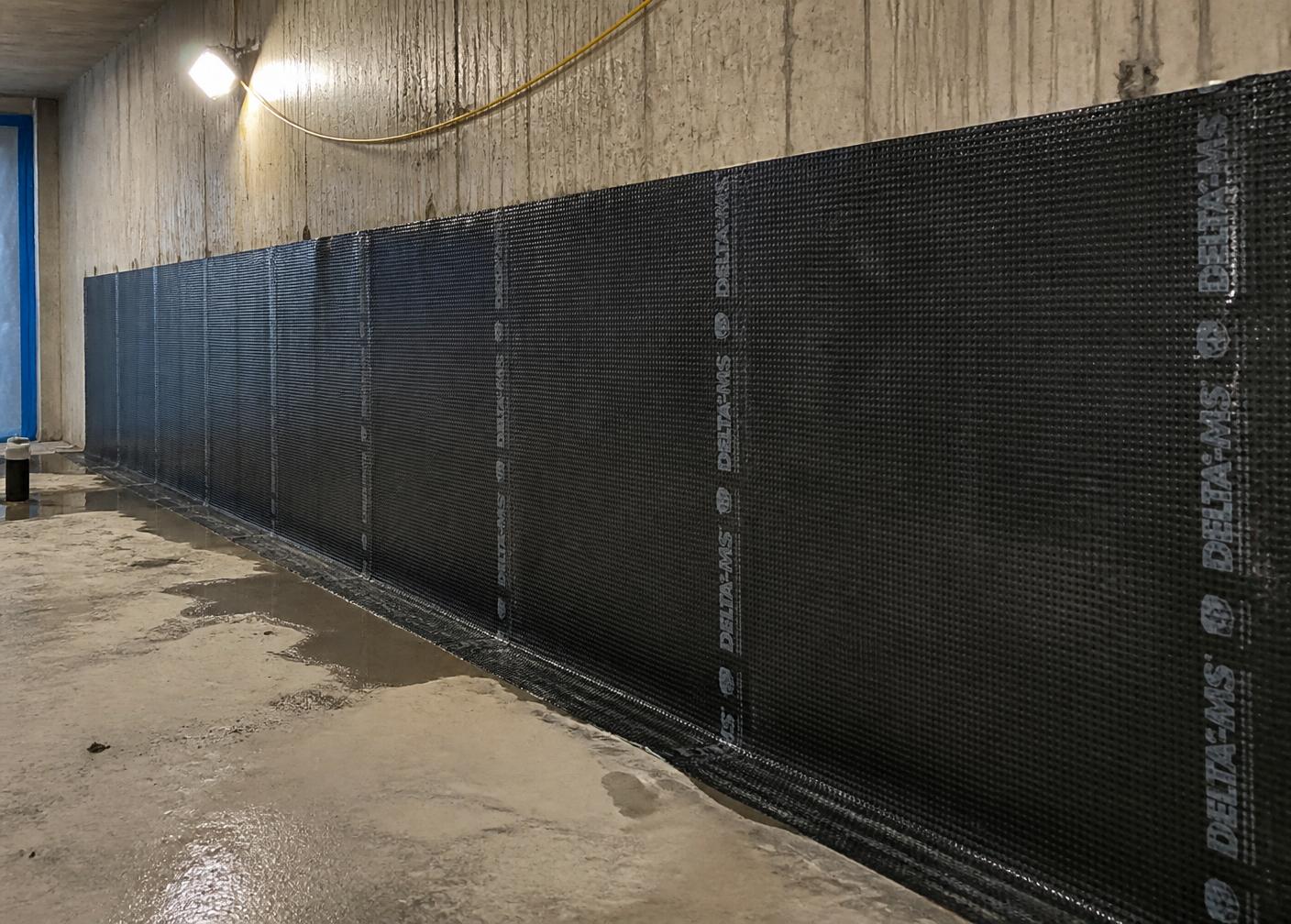
Below-ground waterproofing is a different problem to anything above ground. A basement wall is not just shedding rain — it can be in contact with saturated soil and groundwater that applies constant hydrostatic pressure to the structure, day after day. Diamond Seal Waterproofing carries out basement waterproofing across Sydney for residential and commercial buildings.
Sydney's clay soils, sandstone shelves and sloping sites mean below-ground water behaviour varies enormously from one property to the next. Understanding how water is reaching the structure — surface water, subsoil flow, a perched water table or a drainage failure — is what determines whether a waterproofing solution will actually hold.
Basement water ingress usually announces itself slowly: a musty smell, white efflorescence blooming on the walls, damp patches near the floor-wall junction, rust on stored items, or water pooling in a corner after prolonged rain.
Because the water is under pressure, cosmetic fixes such as painting over the affected area rarely last. The moisture simply reappears, often bringing the coating off the wall with it. Effective basement waterproofing addresses the path the water is taking, not just the surface where it emerges.
Establishing where water is entering, how it varies with rainfall, and whether external drainage is contributing.
Cleaning back concrete or masonry, removing loose material and unsound coatings, and treating cracks and joints.
Determining whether waterproofing can be applied externally against the water, or has to be applied internally to the exposed face.
Applying cementitious or membrane tanking systems suited to below-ground conditions and hydrostatic pressure.
Detailing wall-to-floor junctions, construction joints, service penetrations and pits, which are common ingress points.
Considering how drainage, sumps and subsoil drains work with the waterproofing rather than against it.
Below-ground work focuses on the water path, so the result is not simply a repainted damp wall.
Systems are chosen for constant water contact and pressure, not general external exposure.
A dry basement protects stored items, parking areas and any converted living or work space.
Existing basements with active ingress can be assessed and remediated, not only new construction tanked.
If any of these sound familiar, it is worth having the area assessed before the damage spreads further.
Have a question that isn't covered here? Call 0452 528 532 and we'll talk it through.
Talk to Diamond Seal Waterproofing about your residential, commercial or construction waterproofing requirements.